
Safety information
Safety information
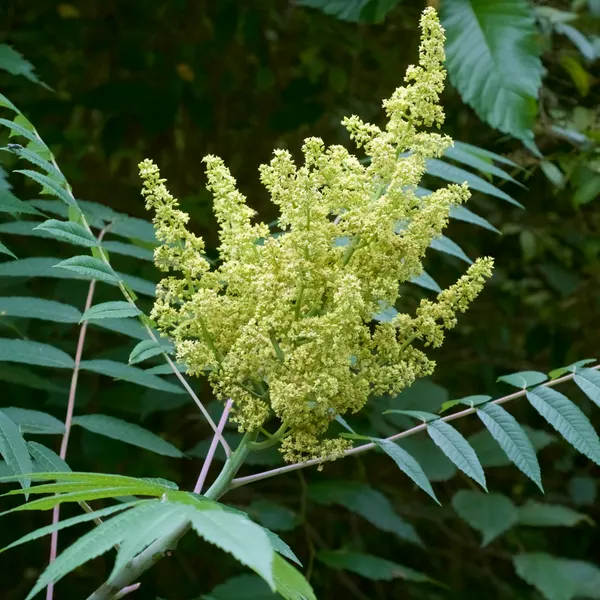
Toxicity: Low for R. glabra/typhina (the red, upright-fruited sumacs). Critical: must NOT be confused with poison sumac (Toxicodendron vernix), which has white/green drooping berries and causes severe dermatitis.
Contraindications: High tannin — caution in large amounts/GI sensitivity.
Interactions: Tannins may impair iron/drug absorption.
Evidence level
Supported by laboratory or animal studies; not yet confirmed in humans.
Preparations
poultice · leaf
Part used: leaf
decoction (bark/root) · bark
Part used: bark
Traditional use: diarrhea, mouth sores, gargle(Folk and historical sources have not been validated by clinical research.)
cold/warm infusion of berries ('sumac-ade') · fruit
Part used: fruit
Traditional use: fevers, sore throat, refreshing astringent drink ('Indian lemonade')
Proposed mechanism: high in tannins, gallic/ascorbic acids, anthocyanins (astringent, antioxidant)
Associated conditions
Edibility
Edible parts: Ripe red berry clusters (steeped cold for a tart vitamin-C drink; the culinary spice 'sumac').
Toxic lookalike warning
Poison sumac (Toxicodendron vernix) has WHITE drooping berries and is dangerous — only the red, erect-clustered sumacs are edible.
Nutritional notes
Berries: vitamin C, malic acid, polyphenols, anthocyanins.
Healing traditions
Related plants
- Daruharidra (tree turmeric / Indian barberry)Berberis aristataClinical
- Musta (nutgrass)Cyperus rotundusClinical
- Khadira (black catechu / cutch tree)Acacia catechuClinical
- Kalgan / TormentilPotentilla erectaClinical
- Sangre de grado / Dragon's bloodCroton lechleriClinical
- Amur cork tree bark / huang bai (黄柏)Phellodendron amurenseClinical
Sources (2)
- Moerman, Native American Ethnobotany — Daniel Moerman
- USDA NRCS PLANTS Database
Sourcing & resources
Affiliate links — we may earn a small commission at no extra cost to you.